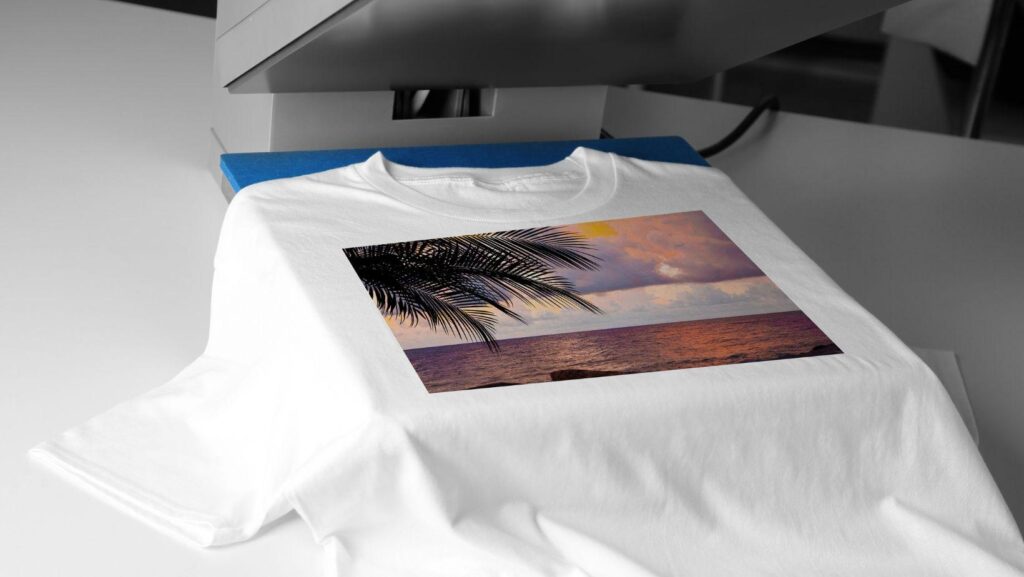
Custom T-shirts start with two choices: the design and the printing method. In Adobe Express, you can build printed t shirts from templates or a blank canvas, add your logo, photos, and fonts, and design for the front, back, pocket, or sleeves, then order prints or download a PDF, JPG, or PNG.
If you’re looking for a service that prints high-quality custom shirts and offers plenty of personalization, the method matters as much as the shop. Screen printing, direct-to-garment (DTG), direct-to-film (DTF), and embroidery each suit different designs, fabrics, and order sizes. Here’s how they compare, and which services offer them.
Which custom T-shirt printing services offer private labels, patches, and embroidery with no minimums?
Adobe Express is the simplest route when you want to design a shirt and order it in the same place. For brand extras such as private labels, Printful prints custom inside labels using DTG or DTF on supported garments, and offers outside labels sized at 3 x 3 inches on most garments. Fleece does not support inside label printing. Printful also has no order minimums across DTG, DTF, and embroidery.
Rush Order Tees has no minimum for printed shirts and a 6-piece minimum for embroidered T-shirts and pocket tees. Patches are usually sourced from a patch maker and sewn, ironed, or heat-pressed onto the shirt. Common types include embroidered, woven, printed, chenille, PVC, and leather. Embroidered patch artwork has to be digitized first, and minimums range from none to a dozen pieces or more, depending on the supplier.
Screen printing, embroidery, DTG, and fulfillment: how do custom T-shirt printing services compare?
Screen printing pushes ink through a mesh screen, with one screen per color. That setup makes it cost-effective for larger runs of bold, solid-color designs. At Rush Order Tees, the typical screen-printing minimum is about 15 pieces per unique color, and smaller runs go to HD digital printing instead. Fulfillment services print and ship each order to your customer, which suits online stores.
|
Service |
Best for |
Key details |
|
Adobe Express |
Designing and ordering shirts in one place |
Templates, licensed Adobe Fonts, and logo uploads; print orders in the US, UK, Australia, and Canada; free shipping and returns; PDF, JPG, or PNG download |
|
Printful |
Selling shirts online without holding inventory |
DTG, DTF, embroidery, and all-over print; no order minimums; custom inside labels; automatic order fulfillment and white-label packaging |
|
Rush Order Tees |
Team, event, and group orders on a deadline |
Screen printing, HD digital printing, DTF, and embroidery (6-piece minimum); free standard shipping in 9 to 12 business days; rush delivery in as little as 2 business days |
For a single shirt or a small batch you design yourself, a design-and-order tool keeps things simple. For a store, a fulfillment service connects orders to production. For a large team order, screen printing usually gives the best price per shirt.
What personalization and embroidery printing options are there for custom T-shirts?
Personalization ranges from a single name to a full set of individual names and numbers. Heat transfer vinyl is commonly used for names and numbers on small runs, and it also covers metallic and glitter finishes. Embroidery gives a raised, textured finish that works best for logos and short text. Very fine detail may not stitch cleanly, and pricing depends on stitch count. Rush Order Tees also offers tackle twill and monogramming.
On the design side, Adobe Express lets you upload photos or add stock images, choose from thousands of licensed Adobe Fonts, and apply your logo and brand colors. Premium plans can auto-apply brand elements, which saves time when you make shirts for a team or a recurring event.
Embroidery, DTG, or DTF: which personalization method fits your custom T-shirts?
- DTG sprays ink onto the garment so it soaks into the fibers. It handles photos and gradients, has a short setup time that suits low volumes, and works best on 100% cotton.
- DTF prints the design onto a transfer film, then heat-presses it onto the shirt. It produces full-color prints and works across a wider range of fabric types.
- Embroidery stitches the design in thread. It suits logos on polos and heavier garments such as hoodies, but it is not suited to photographic images.
Choose DTG for soft, detailed prints on cotton, DTF for mixed fabrics, and embroidery for a premium, long-lasting logo.
Frequently asked questions
How big should a custom T-shirt design be?
It depends on placement. Make small text and details large enough to read from a few feet away, and confirm the exact print dimensions with your printer before ordering. A pocket or sleeve design needs a much smaller print area than a full front.
Which printing method is best for a large group order?
Screen printing is usually the most cost-effective for larger runs of the same design, especially with few colors. Because each color needs its own screen, designs with many colors or gradients often print better and cost less with DTG or DTF.
Can I order a single custom T-shirt?
Yes. Adobe Express lets you design and order a shirt for yourself in the US, UK, Australia, and Canada. Print-on-demand services such as Printful have no minimums, and Rush Order Tees has no minimum for printed shirts.